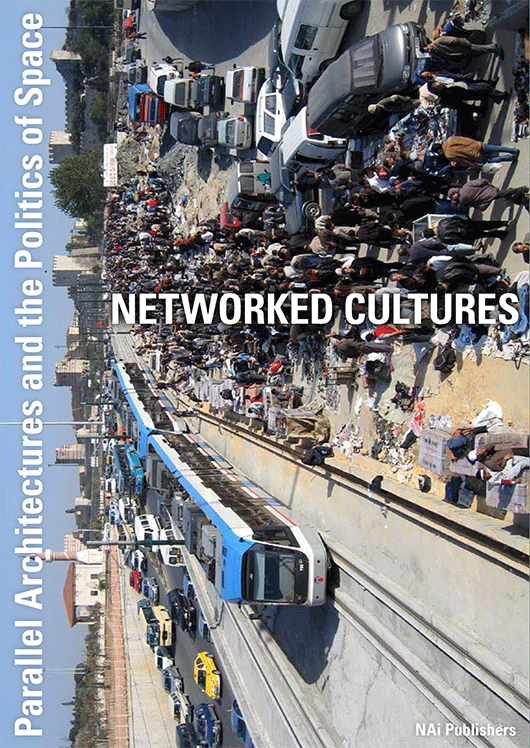
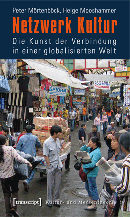
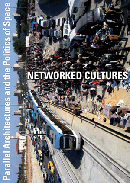
NETWORKED CULTURES
Parallel Architectures and the Politics of Space

Peter Mörtenböck and Helge Mooshammer (eds.)
Rotterdam: NAi Publishers 2008, ISBN 978-90-5662-059-2
www.naipublishers.nl

Networked Cultures - The Dialogues

Un-Built, Athens,
        18 December 2008
VUE, Paris,
        8 November 2008
AzW, Vienna,
        22 October 2008
Whitechapel Gallery, London,
        16 October 2008
santralistanbul, Istanbul,
        25 June, 2008
Pro qm, Berlin,
        10 June, 2008
Proekt_Fabrika, Moscow,
        5 June 2008
Trafó Gallery, Budapest,
        27 May 2008
Storefront for Art and Architecture, New York,
        15 May 2008
al&d, University of Toronto,
        6 May 2008
NAi - Netherlands Architecture Institute, Rotterdam,
        1 May 2008
vai, Bregenz,
        18 April 2008


In our world of flows, networks have become the most powerful tool in how we organise our lives: Networks dominate the rise of global capitalism and its shadow economies, the emergent forms of extrastate control and resistance movements, the worldwide expansion of consumerism and communitarian subcultures. The struggle between network formations produces a space that is both fragmented and contested, yet testifies to the creativity of its inhabitants.

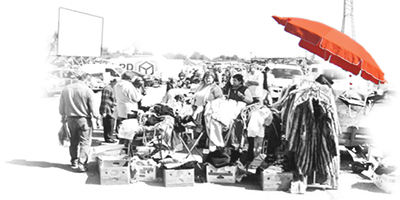
Networked Cultures traces these conflictual negotiations in dialogue with artists, architects, curators and theorists whose work explores possibilities for a multi-inhabitation of territories and narratives across cultural, social or geographic boundaries. Through their shared experiences and accompanying case studies, this book offers an insight into the complex spatial and social realities of globalisation, from city-like informal markets in Moscow and the post-war self-urbanisation in Kosovo to the border economies of the Mediterranean and the parallel worlds of today’s burgeoning megacities.

With texts by Adrian Blackwell, Marina Grzinic, Irit Rogoff and AbdouMaliq Simone, and conversations with Özge Açıkkol, Azra Akšamija, Ayreen Anastas, Ricardo Basbaum, Helmut Batista, Jochen Becker, Matei Bejenaru, Ursula Biemann, Sylvie Blocher, Stefano Boeri, Katherine Carl, Sarah Carrington, Branka Ćurčić, François Daune, Igor Dobricic, Ana Dzokic, Joan Escofet, Jesko Fezer, Asya Filippova, Rene Gabri, Iacopo Gallico, Sophie Hope, Nataša Ilić, Guven Incirlioglu, Katrin Klingan, Vasıf Kortun, Erden Kosova, Olga Lopoukhova, Margarethe Makovec, Marc Neelen, Philipp Oswalt, Kyong Park, Marta Paz, Constantin Petcou, Tadej Pogačar, Poka-Yio, Marjetica Potrc, Gerald Raunig, Oliver Ressler, Josep Saldaña, Marko Sančanin, Güneş Savaş, Florian Schneider, Despoina Sevasti, Pablo de Soto, Srdjan J. Weiss, Eyal Weizman, Seçil Yersel and Claudia Zanfi.

The enclosed DVD features conversations with the contributors to this book that follow the thematic strands along which the collaborative format of Networked Cultures itself has developed: Network Creativity – Contested Spaces – Trading Places – Parallel Worlds.

Editors: Peter Mörtenböck and Helge Mooshammer


INTRODUCTION

Connectivities

Political conflicts, humanitarian disasters, wars and migrations – we live in an age of global unrest and discontinuity. The worldwide movement of populations, burgeoning social mobilizations and the incessantly changing form of the neoliberal economy are generating the energies of a new world order in which we are all constantly challenged to negotiate reality and make deals. Amidst this disintegration of traditional orders, access to networks and the development of connectivities are assuming an ever greater significance for the way we inhabit and configure our environments: as processes in which contours emerge and gradually take on form. Against the background of this structural transformation, networks have also become one of the most prominent concepts relating to the search for new forms of social cohesion and solidarity. The question as to what forms such connectivity should take is not only theoretical in nature but above all a question that points to the self-induced multiplicity of spaces that is continually generated by connectivities throughout the world and that in the process changes our own spaces of action and continually generates them anew.

Networks both structure and constitute an operational field for these proliferating global entanglements of people, places and interests. They become incorporated in space in different ways: in the form of translocal zones of action, community support structures, expanded spheres of influence, spatial superimpositions and intensive contacts and contaminations. However, these expansive forces are accompanied by tendencies to violent segregation and a global dynamic of the fragmentation of living spaces. Top-down visions of the planning and control of environments thus impinge on the bottom-up realities of pulsating metropolises and experimental structures of networked self-organization. This development is generating geocultural tensions, conflicts and clashes everywhere and is investing the task of designing architectures of connectivity with a particular political urgency.

While official reactions in terms of cultural and planning policies for the most part consist in the search for means of stabilization and restraint, the dynamics of deregulation are giving rise to a situation characterized by global parallel systems in which we seek out separate connectivities: parallel architectures, parallel societies, parallel lives. The engagement with these developments on the part of art and architecture in recent years has resulted in a new form of praxis founded on collective production, process-guided work and transversal project platforms. Such a ‘disciplineless’ praxis of unsolicited intervention in spatial contexts renders legible the dysfunctional rules of planned spatial and cultural containment and creates an avenue for generating new forms of circulation amidst the political efforts to conceal this failure. It makes use of existing networks, expands and changes them, gives rise to new circuits and thereby sketches a mobile geography of self-determined utilizations of space and culture.

Our project Networked Cultures aims neither to present this development as a contained movement nor to localize it within the particularities of a specific geographic or institutional context. We are far more interested in its propinquity to a plethora of other self-authorized structures, irregardless of their scale – gray markets, informal commerce, alternative economies and migratory practices as well as the innumerable, minor, barely discernible attempts to establish self-determined sociality in the midst of the reconfiguration of our environments. Such an idiosyncratic propinquity confronts us with the fundamental construction of the modalities of cultural and social experience - with spatial production that is unsolicited and unlimited and that opens up an experiential sphere outside prescribed forms of political representation. These projects exert an effect - albeit one that is difficult to classify - in the realm of political reality, but at the same time they also open up an exterior space that allows for a redistribution of roles and activities beyond the conceptual frameworks commonly applied to discourses of education, planning and societal organization. What forms of cultural interaction and what social environments emerge in the context of such a new mode of production of space, politics and knowledge?

This book interrogates the meanings of this change together with the meanings of artistic, architectural and cultural engagement in these dynamics. It traces a variety of strands along which the Networked Cultures project itself has developed. First, attention is focused on the phenomenon of network creativity by following the routes of networks laid out by artists, architects, urbanists, curators and activists. The site that is hereby opened up marks an arena of engagement with the relationship between space and conflict and leads to an interrogation of contested spaces across Europe and beyond, examining the architecture of conflict, and discussing models of geocultural negotiation. Investigating their modus operandi, the focus then shifts to governmentality and self-government by examining the organizational matrix of black markets, informal settlements and the accompanying parallel economy. Responding to these global realities, the parallel worlds of mobility and migration, 'traveling' communities, digital worlds and other counter-geographies are discussed in relation to a politics of connectivity and the emerging 'archipelago of the peripheries'.

During our exploration of these questions we had the very good fortune to encounter numerous dialog partners ready to share their work and experiences with us. These interactions generated a complex form of connectivity which found its way into the structure of our project and which we have endeavoured to express in the structure of this book. The following contributions have thus been conceived of as a collection of dialogs that aim less to deal with a predefined object than to form new objects collectively. This goal has been pursued, on the one hand, in a series of conversations on urban interventions, public art projects and architectural experiments, which we conducted with architects, artists and curators over a period of two years and excerpts from which are presented here, and, on the other hand, in a series of essays that offer specific perspectives, narratives and interpretations which help to open up the thematic sites of this book.

Building on the network logic of this project and the new spatial creativity of globalized realities, the Networked Cultures project has also utilized and will continue to utilize other platforms. These include a compilation of the conversations with our dialog partners in the form of a film archive enclosed in the book as a DVD, a website comprising a database, images, texts and dialogs (www.networkedcultures.org), and not least the ongoing manifestations of the project in institutional and public spaces. The diverse paths that this project has taken since its inception in 2005 mean that we owe a debt of gratitude to an immense number of people who have accompanied and supported us on our journey. In the course of the project, many of these people have become participants, collaborators and friends. New connectivities have been created, new ground broken.


       contact